Danish Technological University (DTU)

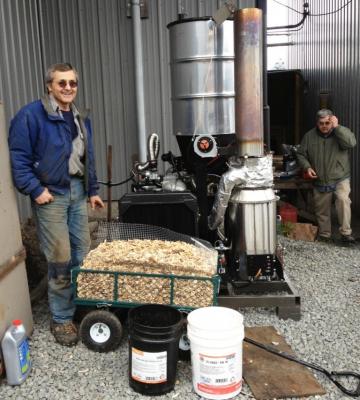
Danish Technological University Updraft Gasifier Plant

Last updated November 05, 2009

Danish Technological University Updraft Gasifier Plant
DTU, Denmark, September 1, 2009

DTU Updraft Gasifier and Stirling EngineDTU Updraft Gasifier and Stirling Engine

Today, operation started on Stirling DK's latest installation situated on the campus areas of the Technical University of Denmark (DTU). Approximately 1% of DTU's total power consumption and 2% of its heat consumption will be supplied by the installation.

The plant includes a Stirling engine with an output of 35 kWe of electrical power. The surplus heat from the plant, in the form of hot water, is fed into the district heating system of the DTU campus.

The plant is fuelled by wood chips originationg partly from cuttings from DTU park areas. In this way, the plant is a stand-alone facility that enables DTU to become partly self-sufficient with CO2-neutral power and heat from locally availabel fuel sources.

More information about the project can be found here.

Characterization of biomass producer gas as fuel for stationary gas engines in combined heat and power production

Last updated February 01, 2009

Characterization of biomass producer gas as fuel for stationary gas engines in combined heat and power production (2MB)
Jesper Ahrenfeldt, Danish Technological University, March 2007

Abstract: The aim of this project has been the characterization of biomass producer gas as a fuel for stationary gas engines in heat and power production. More than 3200 hours of gas engine operation, with producer gas as fuel, has been conducted at the biomass gasification combined heat and power (CHP)demonstration and research plant,named “Viking” at the Technical University of Denmark. The plant and engine have been operated continuously and unmanned. Producer gas properties and contaminations have been investigated. No detectable tar content was observed in the gas that goes to the engine; this was confirmed by three different measuring methods. Likewise, no particles were detected in the gas. Considerable amounts of NH3 were measured in the produced gas.An analysis of engine operation at varying load has been carried out. Standard emissions, load and efficiency have been measured at varying operating conditions ranging from 50% to 90% load. Biomass producer gas is an excellent lean burn engine fuel: Operation of a natural aspirated engine has been achieved for 1.2<λ<2.8 without significant reduction of engine efficiency. Relatively high emission of unburned CO was seen at all operating conditions when compared to the current European regulations for CO emissions. The high CO emission from producer gas engine operation is primarily due to the high content of CO in the fuel and is therefore, like UHC emissions from natural gas engines, a measure of fuel passing unburned through the combustion. NOx emissions are in general not a problem for lean burn producer gas operation, except for producer gas with very high concentrations of NH3. Measurements of the emission of polycyclic aromatic hydrocarbons (PAH)showed that there were no detectable PAH in exhaust gas from the engine when it is operated on producer gas. The emissions of aldehydes and laughter gas were measured to be significantly lower for producer gas operation than for natural gas. Analysis of the combustion process for producer gas operation by applying a heat release model showed a constant low level of cyclic variations for a wide range of λ-values. The absence of extreme combustion cycles characterizes producer gas as a good lean burn fuel and indicates that producer gas may be applied in engines with high compression ratio. The engine heads have been removed several times in order to inspect the internal parts for formation of deposits, wear and corrosion, and no significant built up has been seen. Frequent oil analysis has been conducted and no significant degeneration has been seen.

Published: (ISBN: 87-7475-343-6) , pages: 80, 200712

Syndicate content