For people involved in the development of GASIFICATION SYSTEMS as discussed on
the Gasification email list.


Current topics, pictures and reports are posted here. For more information, also sign up for the discussion list, browse the archive, and ask questions.

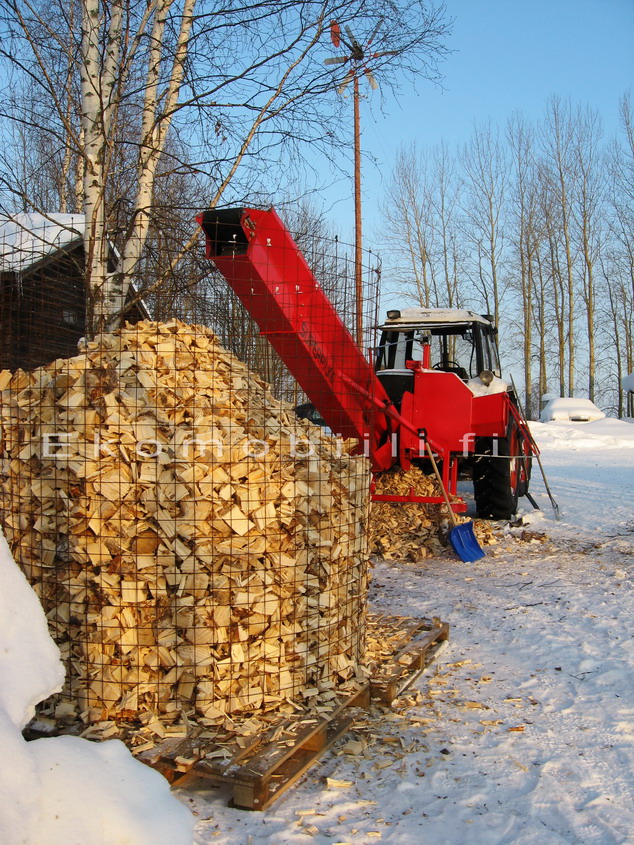
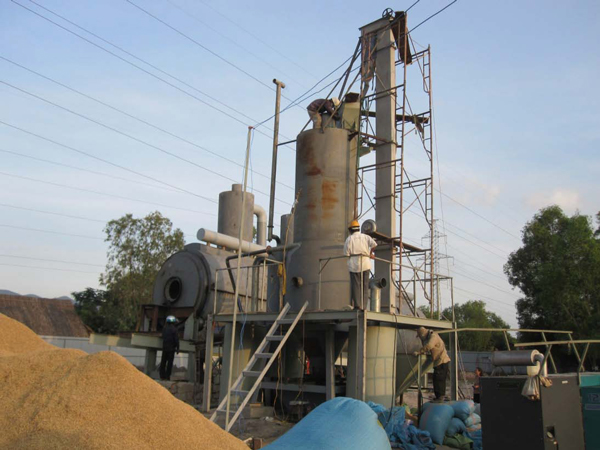
Mobile Pyrolysis Plant to produce charcoal, birch tar, tar, tire recycling.

Mobile Pyrolysis Plant fig 1
Mobile Pyrolysis Plant fig 4

from Yury Blagodarov, December 2011

Mobile pyrolysis plant is designed not only to produce charcoal, but also for the production of birch tar from birch bark, automotive recycling tires into liquid fuel. As we know the demand for charcoal depends on the season. In the spring and summer of charcoal taken better in winter, worse. Birch tar is always in demand, but in small quantities. His take veterinary hospitals, pharmacies, some enterprises Chemical Industry. On tire recycling products is a constant demand for steel cord, coke (with a mixture of soot). For liquid heating oil needs a constant source of sales. In addition, the tires are not always in large quantities.and for their storage needs more space. Due to the versatility you can optimally allocate mode setting so that it is not idle, and there was a constant sales.
In the production of charcoal in the mobile uglevyzhigatelnyh facilities for people working in them, you have to manually unload the charcoal, wood dust to breathe, which affects their health.
Mobile uglevyzhigatelnye installation with a few exceptions, much smoke, emit dymogazy, which contains a number of not dogorevshih combustibles.

The most advanced facilities at the lower emission of harmful substances into the atmosphere from stationary pyrolysis systems NRM Polikor, Ekolon. The process of charcoal production is mechanized.
Of mobile pyrolysis plants can be noted uglevyzhigatelnyh pyrolysis furnace uglevyzhigatelnuyu MUL2S, but it is necessary to exit the charcoal by hand. You also need time to cool down the furnace.

Proposed for the production of pyrolysis for charcoal burning mobile unit consists of several sections hoppers (retorts).Bunkers are closed tightly. They are mounted on hinges and can be rotated in a vertical plane. So, if you want to unload the charcoal ready, simply turn the tank and hold it in front of the bunker-settler. Next, open the door in the side hopper and charcoal thrown out himself in the bunker-settler. Then, the charcoal in a bunker-sump cover asbotkanyu to spontaneous combustion of coal was not. Just a few minutes and the hopper is ready for the next boot .. And load it as follows: hand winch or two people turn the hopper (retort) in the vertical plane to the horizontal position and lock in this position, putting on scarves, a hopper tube. Next, you can start loading firewood or tires, processed tires if for the production of liquid fuels. I note that the processing of tires need additional equipment for the condensation of combustible gases and liquid filtration otopliva.

In the mobile pyrolysis unit best burn combustible gases. Saving wood combustion in the combustion chamber reaches up to 25%. In addition, in the process of heating boilers and carbonation involves pyrolysis gases leaving when shrinkage drevesiny.Na bins installed three-way valves. When an intense parovydelenie, steam is expelled through a three-way valve.

The process of starting the boiler in the following: first, melted wood in the firebox, and then the boiler works and heats the hopper combustion of pyrolysis gases coming out one by one with each bin. For the afterburner pyrogas provides secondary air supply to the nozzle located below the combustion chamber.

The design of the installation is designed so that you can get close to any location and make repairs in places most high-temperature steel sheets are replaced by chamotte plate. All heat-stressed place of the combustion chamber are thermally insulated. Steel structures are not subject to deformation.

Details of the construction of this facility is described in etogm site:
http://blogs.mail.ru/list/user-05/

Country: 

Using the the JXQ-10 or Stak 10K gasifiers to produce Engine Fuel

From Pete Stanaitis, December, 2011

produce engine grade fuel.

The question on everyone’s mind is:

“How can I make my machine produce engine grade gas for decent periods of time?”

Several people have had partial success so far. I (we) know that this device isn’t an imbert style machine, but we who have them do want to see how far they can be pushed.
To that end:
I have been accumulating correspondence between myself and about 15 other users/interested parties since June of this year.
-Many questions have been asked and answered.
-Several members have been reporting test results
-Several members have been making changes and modifications to the machines and the process.

These messages are simply arranged (roughly) by date, by correspondent, newest entry first, on the following webpage:

http://www.spaco.org/Woodgas/JXQ-10forum.htm

If you are a user of one of these machines (or are seriously interested in getting one), and have some input or some serious questions, please check out that page and give us input as you see fit.

NOTE: Senior members of this list are unlikely to gain any new knowledge by visiting this page.---- yet, anyway.

Pete Stanaitis
----------------

Authors: 
Engines: 

25 to 50 ton/day Gasifier Gasifier for Sale

Erin Rasmussen 2011-10-25 18:21

25 to 50 ton/day Gasifier

Asking $399,000 USD,

AS IS WHERE IS

  • Primary operations on scrap tires, but also suitable for wood or MSW
  • Air-blown, Slagginggasifier (could be modified to dry ash removal)
  • Custom whole tire compression feeder
  • ~2500hours of operation

Seller willing to carry some short-term financing. Plant located near Price, Utah, USA
For inquiries, send email to: pilotgasifier@gmail.com

Uniconfort Boiler: Biomass Gasification Boiler Technology Evolves

Uniconfort Boiler

From Doug Cure of Alternative Energy Solutions International, October, 2011

As the United States biomass thermal and power industry continues to expand, new reliable technologies offering higher efficiency solutions must be introduced. The newly introduced EOS series biomass gasification boiler is among the most energy efficient of AESI’s high-performance, low-maintenance biomass energy plants. The EOS series provides thermal outputs ranging from 600,000 BTU/hr to 20 million BTU/hr, and can be staged to provide increased capacity.

Demonstrations: 
Authors: 

INSER Circle Draft Biomass Gasifier

Erin Rasmussen 2011-10-08 11:59

Gian Claudio Faussone, October, 2011

The Italian group INSER has come up with a gasification process that they have patented as Circle Draft.

As described by them, the reactor vessel is composed of two chambers.

In the top chamber, the feedstock is pyrolysed and converted to charcoal (which is the yellow in the figure).
Then the charcoal descends into the lower vessel (grey in the figure) where it is gasified (generally with additional air) and a variable amount of steam or water.

Companies: 
Demonstrations: 
Country: 
Authors: 

Continuous Feed Biomass Gasifier for Thermal Applications

Erin Rasmussen 2011-09-29 11:03

Robert Sinan Kana, Muslim Gunawan

Energy from Waste project
Pt. Biomass Energy, Purworejo, Java Tengah, Indonesia

Continues Feed Biomass Gasifier for Thermal Applications

A biomass waste wood gasifier plant, to provide thermal energy to dry 6 m3 of wood in 12
days. This system is developed by Biomass Energy Purworejo, Java Tengah, Indonesia for
small industry thermal applications to save fossil fuel, create energy from waste and reduce carbon footprint of the business and industries.

Country: 
Fuels: 
Demonstrations: 
Gas Conditioning: 
Authors: 

Pilot Project: Brookes and Harsh Manure Gasifier

Erin Rasmussen 2011-11-22 16:10

July, 2011

Bob Brown with Harsh International and David Brooks with ZEBREX have been working on a pilot project to develop a continous feed manure gasifier. They have been working with JBS Five Rivers Cattle Feeding in designing and fabricating a pilot facility that uses augers and a drying oven in the feed system for the manure gasifier.

Companies: 

Facts about Producer Gas Engines

G. Sridhar and Ravindra Babu Yarasu June, 2011

We are pleased to learn of this paper, in which Sridhar and Yarasu connect and engine that is designed to run on producer gas to a downdraft gasifier, and learn a lot of new things; one of which is that the engine runs efficiently at a higher compression ratio without any problems with knock. They do a great job of presenting the results from their trials, and then comparing standard modeling tools and finding where the gaps are. Well worth the read.

Country: 
Demonstrations: 
Authors: 
Practical Application: 
Resources: 
Type: 

Pages

Subscribe to BioEnergy Lists: Gasifiers & Gasification RSS