CU Burns 'Torrefied" Wood Instead of Pure Coal in Test

Last updated November 04, 2009

KSMU Ozarks Public Radio, Friday, 14 August 2009

CU Burns 'Torrefied" Wood Instead of Pure Coal in Test

City Utilities of Springfield invited local journalists out Thursday to witness an experiment in burning something other than coal to produce electricity. KSMU's Jennifer Moore took them up on the invitation and headed out.

CU Experiments By Burning 'Torrefied' Wood

The monitors in the control room at the James River Power Station indicate whether the test burn is working. (Photo credit: Jennifer Moore)
Pictures

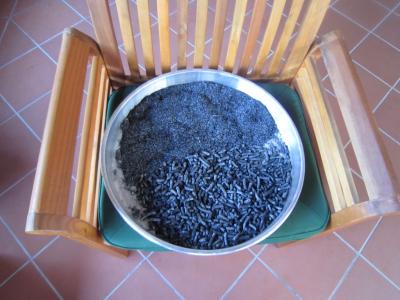
Reporter: "Right now, I'm at the James River Power Station, just southeast of the city limits, near Lake Springfield. I'm surrounded by rather large hills of black coal, and looming over my shoulder are four enormous smokestacks. This coal is obviously burned to provide energy for the city. But the reason why we're here today has to do with a much smaller pile of what looks like dark sawdust. This is torrefied wood. And City Utilities is doing a test today to see whether this torrefied wood could be blended with coal to provide an alternative source of energy."

"We're gonna burn some of the torrefied wood we made in a plant in Missouri for a test," said Andrew Livingston, president of Earthcare Products Incorporated, based in Independence, Kansas. His company designs and engineers biomass energy systems, including producing torrefied wood. He arranged for this pile of wood to be here today.

Torrefication is a process of “roasting,” if you will, wood chips in a large furnace to remove the moisture and make the product more brittle. This process changes the wood chips, so that they are easier to crush for burning in generators like the ones here at CU.

"It will grind the torrefied wood as small as coal, with less horsepower, and burn in suspension burners in coal-fired boilers. It will blend, or it can be fired to 100 percent of the fuel rates. This is being tested for the first time in North America in a coal-fired boiler with this volume of torrefied wood," Livingston said.

Livingston said torrefied wood is "CO2 neutral," and that the environmental benefits to burning it as opposed to burning pure coal are plenty. As reporters look on, CU employees flip a switch and the pile of torrefied wood begins to disappear, due to a hole that is opened up under the pile. This allows the wood to fall onto an underground conveyor belt and make its way into the plant.

Danish Technological University Updraft Gasifier Plant

Last updated November 05, 2009

Danish Technological University Updraft Gasifier Plant
DTU, Denmark, September 1, 2009

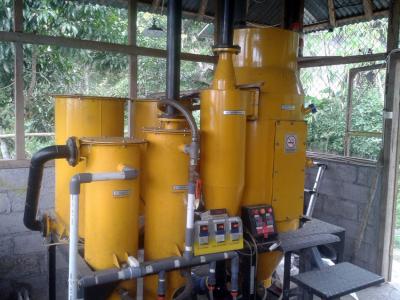
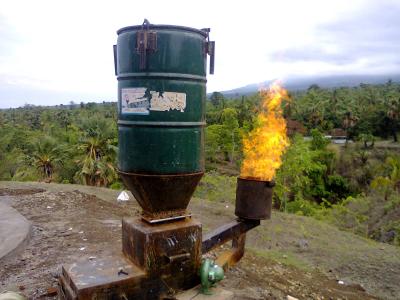
DTU Updraft Gasifier and Stirling EngineDTU Updraft Gasifier and Stirling Engine

Today, operation started on Stirling DK's latest installation situated on the campus areas of the Technical University of Denmark (DTU). Approximately 1% of DTU's total power consumption and 2% of its heat consumption will be supplied by the installation.

The plant includes a Stirling engine with an output of 35 kWe of electrical power. The surplus heat from the plant, in the form of hot water, is fed into the district heating system of the DTU campus.

The plant is fuelled by wood chips originationg partly from cuttings from DTU park areas. In this way, the plant is a stand-alone facility that enables DTU to become partly self-sufficient with CO2-neutral power and heat from locally availabel fuel sources.

More information about the project can be found here.

Clean Heat and Power Using Biomass Gasification for Small- to Medium-Scale Industrial and Agricultural Projects

Last updated October 19, 2009

Clean Heat and Power Using Biomass Gasification for Small- to Medium-Scale Industrial and Agricultural Projects
Carolyn Roos, Washington State University, Extension Energy Program, July 2009

http://www.pacificbiomass.org/documents/Clean_Heat_and_Power_Using_Biomass_Gasification_for_Industrial_and_Agricultural_Projects_Roos_July_2009.pdf

Executive Summary

The use of biomass to generate heat and power is crucial in achieving energy independence and increasing our use of renewable energy sources. In our transition to renewable energy, gasification promises to play a major role in large part because its products can make use of existing infrastructure and equipment associated with fossil fuel use. This guidebook is intended for use by the forest products and food processing industries. It can also be used by farmers, ranchers and others who have access to biomass materials.

Gasification is a thermal conversion process in which both heat and a combustible product gas are produced. Combustion, in contrast, produces only heat, most commonly in a boiler to generate steam for production of electricity using a steam turbine. With gasification, generation of a combustible gas is key to its importance. A gaseous fuel makes the use of reciprocating engines, gas turbines and fuels cells possible in the generation of electricity, thereby increasing electrical efficiency. Gasification also makes possible a highly efficient configuration for generating electricity, referred to as an integrated gasification combined cycle (IGCC). Further, gasification can facilitate the use of biomass for heat and power because gaseous fuels can be distributed by pipeline from a gasification plant for use in other locations, either on site or off.

Gasification of biomass and the use of the product gas in boilers and furnaces have a long and proven history. However, using the product gas for efficient electricity generation with engines, turbines and fuel cells has been hampered until recently by technical difficulties in removing tars from the product gas. Tar removal technologies have advanced in recent years and have now been successfully demonstrated and proven reliable. With these advances, biomass gasification for generation of heat and power has now emerged into commercialization. In the U.S., construction will begin in 2009 on a 42 MWe commercial-scale project in Tallahassee, Florida, and another 28 MWe gasifier is planned for Forsythe, Georgia. Around the world, more than 100 biomass gasifier projects are operating or ordered.

In addition to heat and power, there is a wide array of co-products possible with gasification. This can improve the cost effectiveness of a gasification project. The product gas can be used as a feedstock to produce hydrogen and liquid hydrocarbons, such as ethanol and chemical feedstocks. Biochar has several potential markets and also gives gasification the potential of a carbon neutral or carbon negative energy solution. Both combustion and gasification produce ash, which also can be marketed.

This guide is a practical overview of gasification on the small (<1 MW) and medium scales appropriate for food processors, farmers, forest products industries and others with access to biomass materials. The selection and application of gasifiers, engines and turbines, feedstock preparation and handling equipment, gas clean up technologies, and other ancillary equipment are discussed. Practical strategies for avoiding slagging, fouling and corrosion in the gasifier and downstream equipment are discussed.

Market Assessment of Biomass Gasification and Combustion Technology for Small- and Medium-Scale Applications

Last updated October 19, 2009

Market Assessment of Biomass Gasification and Combustion Technology for Small- and Medium-Scale Applications
David Peterson and Scott Haase, for Natioanl renewable Energy Laboratory, July 2009

http://www.cleanenergystates.org/Publications/NREL_Biomass_Gasification_Mkt_Assessment_46190.pdf

Executive Summary
At the request of the Clean Energy States Alliance (CESA), the National Renewable Energy
Laboratory prepared this market assessment of gasification and direct combustion technologies
that utilize solid biomass to generate heat, power, or combined heat and power (CHP) for smallto
medium-scale applications. Solid biomass refers to primarily wood and agricultural resources.

The report contains the following:
• An overview of solid biomass resources in the United States.
• Description of gasification and combustion conversion technologies that utilize solid
biomass to generate heat, power, and CHP.
• Discussion of the strengths and weaknesses of gasification and combustion technologies.
• Assessment of the commercial status of gasification and combustion technologies.
• Summary of gasification and combustion system economics.
• Market potential for small- to medium-scale gasification and combustion systems.
• An inventory of direct combustion system suppliers.
• An inventory of gasification technology companies.

The major findings and conclusions of the market assessment include the following:

• Direct combustion boiler systems that generate heat, power, or CHP are available
commercially from a number of manufacturers.
• Close-coupled gasification boiler systems to generate heat, power, or CHP are
commercially available from a number of manufacturers.
• Two-stage gasification systems designed to generate heat, power, or CHP largely are in
development, with a number of technologies currently in the demonstration phase.
• A searchable database of operating combustion and gasification systems designed to
generate heat, power, or CHP is needed for all projects built in the United States.
• A national assessment of the market potential for direct combustion and gasification
systems that generate heat, power, or CHP should be commissioned.
• An online registry of all operating small-scale and community-scale direct combustion
and gasification systems that convert biomass into heat, power, or CHP in the United
States should be created and maintained.

Invitation to Gasification Workshop, Thursday, October 22nd, Stockholm, Sweden

Last updated October 10, 2009

Regional Gasification Guide Workshop for the Nordic Countries

Thursday, October 22nd, 9:00-12:00, Clarion Hotel Sign, Stockholm, Sweden

The workshop is part of the Intelligent Energy for Europe project "Guideline for Safe and Eco-friendly Biomass Gasification" (www.gasification-guide.eu). The workshop will focus on legislative and regulatory barriers for gasification plants existing at local, regional or national level in the Nordic countries. The workshop also includes presentations of a number of gasification projects. The workshop is organised in conjunction with the seminar Gasification 2009 - Gas Clean-up and Gas Treatment (www.sgc.se/gasification2009).

Participation in the workshop is free of charge. For signing up for the workshop, please send an e-mail to tep@cowi.dk.

Please find attached a further description and programme for the workshop.

<<Workshop Programme.pdf>>

The workshop will take place at Clarion Hotel Sign, Östra Järnvägsgatan 35, Stockholm, Sweden, in the same place as the Gasification 2009 seminar.

We would be grateful if you would forward this e-mail to your contacts.

 Yours sincerely,

Thomas Engberg Pedersen

----------------------------------

COWI A/S

Parallelvej 2

DK-2800 Lyngby

Direct    +45 4597 2225

Mobile  +45 2941 0674

Fax         +45 4597 2114

www.cowi.com


tcbiomass2009 Proceedings

Last updated October 08, 2009

The tcbiomass2009 proceedings have been posted on our website.  If you have not visited the updated site, you may access it here.  We have a summary of the conference and several photos taken during the conference, along with oral presentations, panel presentations and poster presentations.

Gasification I


Gasification II


Gasification Panel Discussion

 Posters

Gasification


Colleen Wessel
Gas Technology Institute
1700 South Mt. Prospect Road  |  Des Plaines, IL  60018
P: 847/768-0565  |  F: 847/768-0842  |  colleen.wessel@gastechnology.org

A new Powerhearth for the marketplace!

Last updated October 08, 2009

A new Powerhearth for the marketplace!
Bill Klein, 3i, October 6, 2009

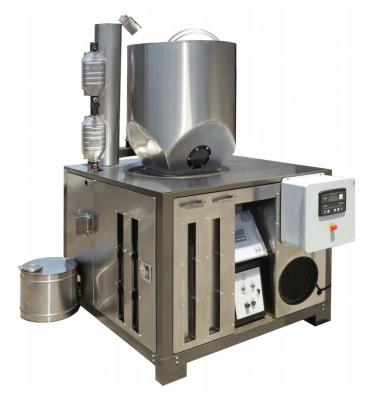
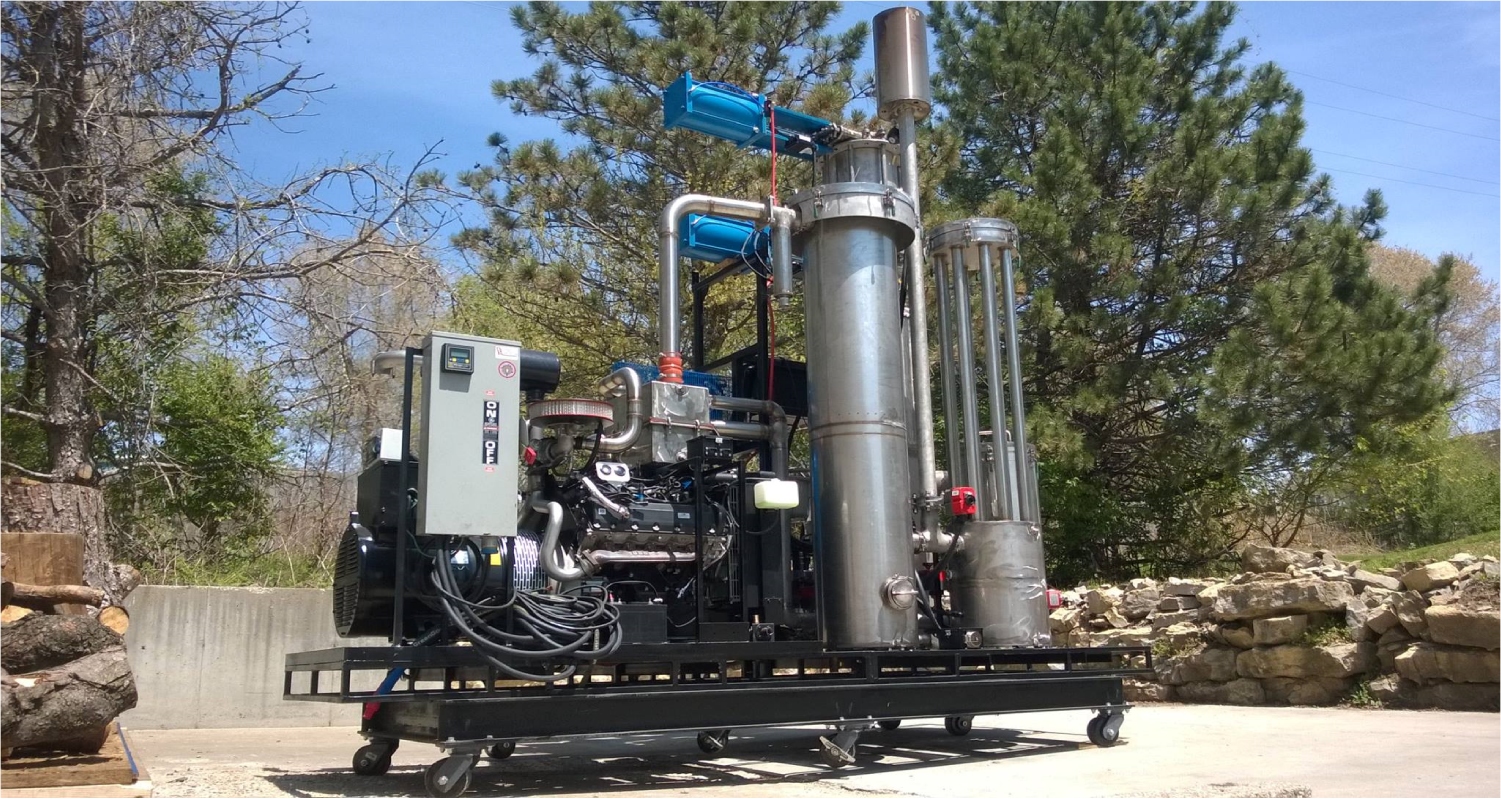
3i (International Innovations Incorporated), the manufacturers of the world famous Powerhearth, an environmentally friendly biomass conversion system, proudly announce the availability of the Mini Powerhearth in sizes from 5 to 25 KWe. Please find several photographs on the Gasification List web site or contact us directly.

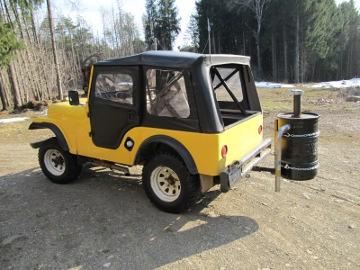
The photographs are of a newly commissioned 5 KWe Powerhearth, shortly after its final testing before delivery to the customer.

This particular unit is a trailer mounted model and will be used in the woods by the customer/logger as a power source for his portable sawmill. By choice, it will be manually operated and batch loaded.

Our regular production model would be outfitted with a continuous feed, airtight auger system from an adjacent metering bin.

We first began work on the great grandparents of this little guy in 2006 and, after thousands of hours of testing, decided we could finally commercialize the model last June. Though a "hunk of metal", we think it's beautiful and it works so bloody well!

A few stats:

Fixed bed, downdraft, linear hearth biomass conversion system

Two inch throat

Makes in excess of 10 cfm gas flow, measured after the gas cooler/cleaner/polisher

Length - without shrouds: 1.5 feet

Width - without shrouds: 1.16 feet

Height: Just under four feet

Weight: approximately 500 lbs.

Operating temperature: 1,250 - 1,300 C

Turndown test - 12 hours: less than 2 cfm

Prior to shipment, each unit undergoes 2 24 hour non stop tests and a 100 hour non stop certification test. The same tests are repeated during commissioning, but with engine(s) and electronics, computers, etc. fully integrated**

** As an option, the unit is capable of full automation, including ash removal and is sized appropriately to maintain net output and parasitic load.

Feedstock: wood chips* 15 to 25% mc and produces a clean and clear flare.

Ash content: approximately 0.25%, but may go as high as 0.5% - clean, fine ash w/o visible char

* As part of the test protocol, each Powerhearth is tested with briquettes of various origin as a check for versatility. Briquettes include green waste, bagasse, non putrescent MSW, black coal, brown coal, rubber, sewage sludge, livestock waste, certain plastics and RDF.

We believe this to be the smallest commercial gasifier capable of producing clean, engine ready, gas 24/7. Each unit is accompanied by the same Powerhearth performance guarantee and full service warranty.

Respectfully,

Bill Klein

3i

Powerhearth: the power of energy independence. It's your choice!

http://www.3iAlternativePower.com

Side view W/o Engine on Trailer

Gasification 2009 - Gas Clean-up and Gas Treatment

Last updated September 19, 2009

the Swedish Gas Centre (SGC) would like to draw your attention to our annual international seminar on gasification.

This year the seminar will take place October 22-23 in Stockholm, Sweden.

Please visit the seminar homepage for more info:
http://www.sgc.se/gasification2009

The presentations will be available as PDFs after the seminar. You will also find links

to presentations from previous seminars.

In conjunction with the seminar there will be a workshop related to the IEE-project (Intelligent Energy for Europe)

Guideline for Safe and Eco-friendly Biomass Gasification, http:/www.gasification-guide.eu

The workshop is held 09:00-12:00 the 22nd October in the place of the seminar.

IEA Task 33 Gasification: Highlights of Current Biomass Gasification Activities in Member Countries May 2009

Last updated June 15, 2009
 
Technical Presentations from First Semi-Annual Task Meeting - 2009
May 13-15, 2009 — Karlsruhe, Germany


Presentation
Author(s)
USA
(pdf 3.3 MB)
Richard Bain, NREL
Finland
(pdf 1.0 MB)
Ilkka Hannula, VTT
Denmark
(pdf 4.5 MB)
Henrik Christiansen, DEA
New Zealand
(pdf 1.6 MB)
Shu-sheng Pang, Univ. of Canterbury
Switzerland
(pdf 1.7 MB)
Ruedi Buhler, U&E
Switzerland
(pdf 544 KB)
Serge Biollaz, U&E
Italy
(pdf 1.2 MB)
Giuseppe Fiorenza, ENEA
European Commission
N/A
Sweden
(pdf 2.1 MB)
Lars Waldheim, TPS
Netherlands
(pdf 414 KB)
Bram van der Drift, ECN
Austria
(pdf 231 KB)
Reinhard Rauch, TUV
Germany
(pdf 2.2 MB)
Thomas Kolb ITC-TAB
Helmut Seifert, ITC-TAB
Canada
(pdf 231 KB)
Fernando Preto, NRC


Biomass Derived Raw Gas Clean-up, Gas Conditioning, and Synthesis Gas Conversion
Presentation
Presenter(s)
Dr. Ulrich Arnold, ITC-CPV
Dina Bacovsky, Bioenergy 2020+
Richard Bain, NREL
Two Worlds Meet
(pdf 204 KB)
Bram van der Drift, ECN
Rikard Gerbart, ETC
John Bogild Hansen, Haldor Topsoe
Matthias Kasper, Lurgi GmbH
Esa Kurkela, VTT
Hans Leibold, ITC-TAB
Olaf von Morstein, Uhde
Reinhard Rauch, TUV
Georg Schaub Engler-Bunte-Institut
olaf Schulze, CTO
Ekkehard Schwab, BASF SE

IEA Task 33 Gasification: HIGHLIGHTS OF CURRENT BIOMASS GASIFICATION ACTIVITIES IN MEMBER COUNTRIES OCt 2008

Last updated May 02, 2009
Technical Presentations from Second Semi-Annual Task Meeting - 2008
Oct 15-17, 2008 — Montreal, Canada
Presentation
Author(s)
Canada
(pdf 1.2 MB)
Blaine Kennedy, SDTC
Netherlands
(pdf 1.2 MB)
Bram van Der Drift, ECN
Austria
(pdf 1 MB)
Reinhard Rauch, TUV
Germany
(pdf 1.5 MB)
Thomas Kolb, ITC-TAB
Sweden
(pdf 1.5 MB)
Lars Waldheim, TPS
USA
(pdf 1.3 MB)
Bill Farthing, GTI
Syndicate content