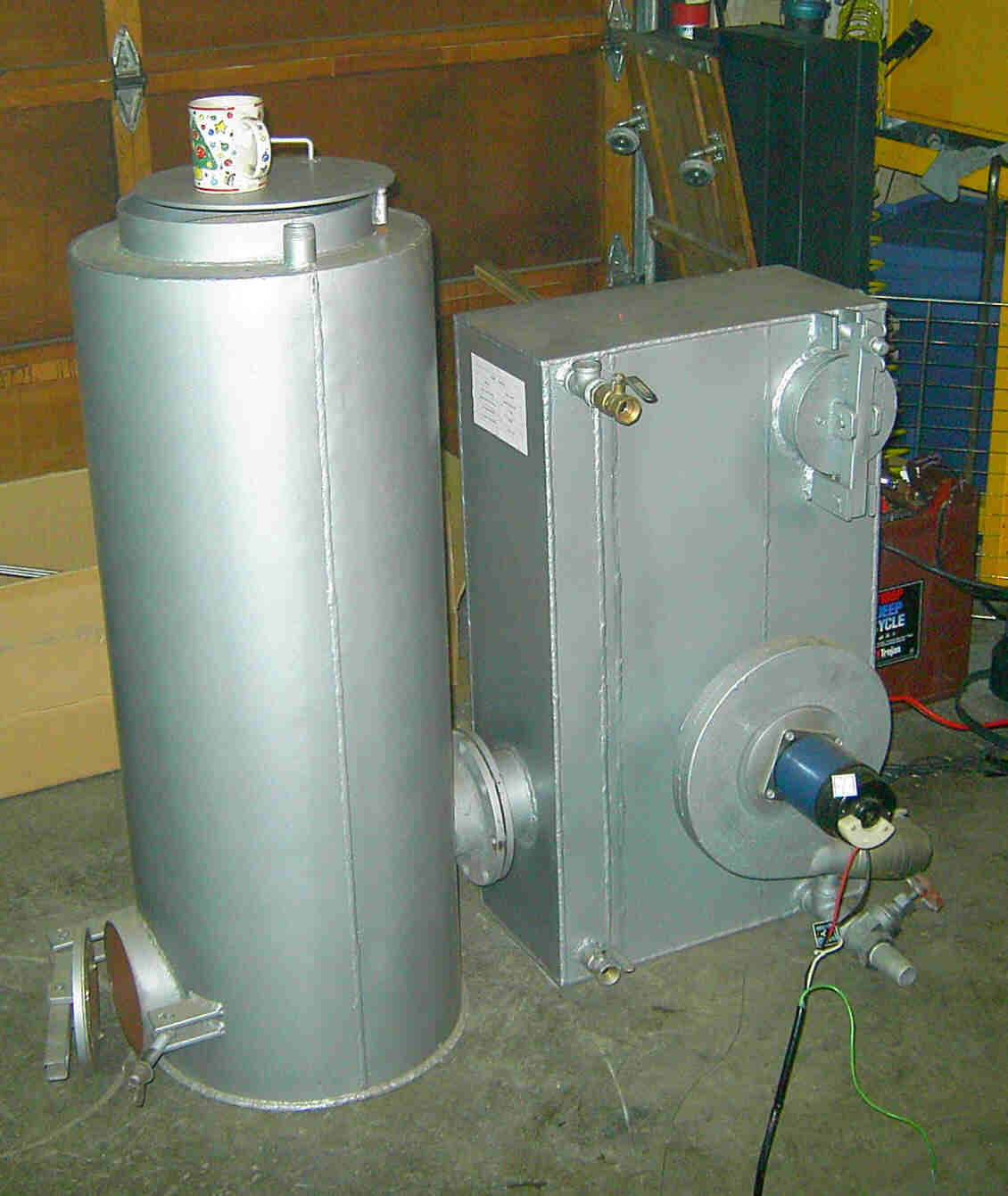
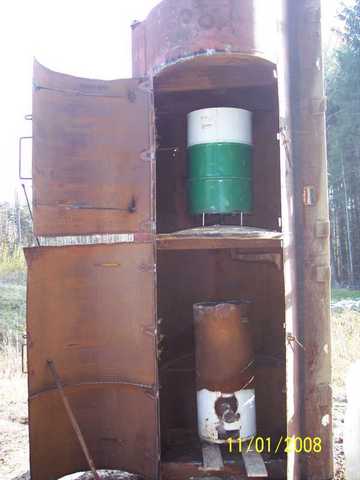
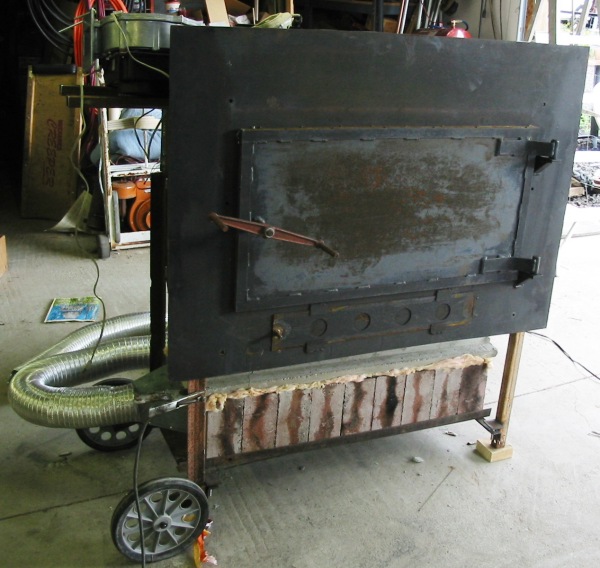
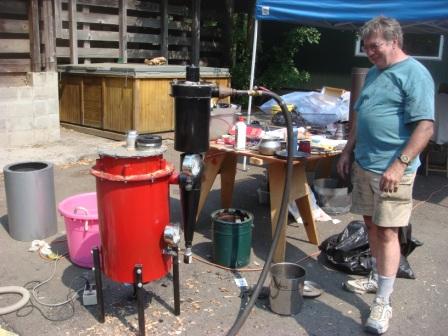
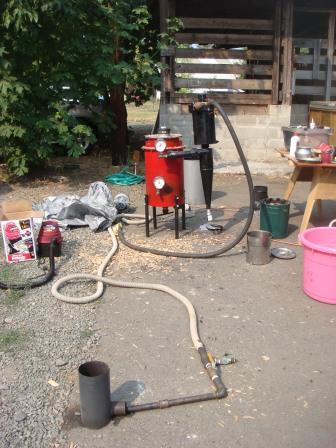
Finnish "Superpilke" machine could produce fuel for cars
Submitted by Erin Rasmussen on
Vesa Mikkonen February, 2011
- Read more about Finnish "Superpilke" machine could produce fuel for cars
- Log in to post comments
- 2627 reads
For people involved in the development of GASIFICATION SYSTEMS as discussed on
the Gasification email list.
Current topics, pictures and reports are posted here. For more information, also sign up for the discussion list, browse the archive, and ask questions.
Submitted by Erin Rasmussen on
Vesa Mikkonen February, 2011
Submitted by Erin Rasmussen on
Li Chen with S3D –Waste & Sustainable Development Solutions, Nantes, France
http://www.sol3d.com
Li Chen was kind enough to share her presentation with us:
Submitted by Erin Rasmussen on
This is my first ever post to the gasification group. However the Range fuels failure was predictable, and is worth a response . The Range fuels failure discussed on gasification listserv brings up the 40-year old question of whether cellulosic ethanol by any path can really work commercially. I have been working on this for (believe it or not) almost 40 years.
I have been mostly in biofuels --digestion recently. Also looking (skeptically) at such things as cellulosic ethanol, algal biofuel, and in depth (more than possible to detail here) at small-scale gasification to produce clean motor fuel. As an academic credential I have coursework and qualifiers and all but dissertation for a Ph. D from MIT (if you want to believe that sort of credential) . I also have over 30 years' experience in fieldwork on biofuels, see for example World Bank site presentation at
http://siteresources.worldbank.org/INTUSWM/Resources/Angenstein_controll...
AND
I have looked at cellulosic ethanol in great depth, over the 30+ year time span as an employee of Exxon Research and Engineering, the Electric Power Research Institute and IEM. (independently)
SO
>From my original analysis along with coworkers' help. I and we see no way that cellulosic ethanol can be commercially feasible. I attach a Power Point presentation we gave in Vancouver BC in 2006. The presentation makes that case. I also append below a brief writeup by John Benemann on The Oil Drum which makes the same points. Nothing has changed to the present. The failure of Range fuels, and failure of dozens of other cellulosic ethanol projects to come to fruition would vindicate our conclusions.
The problem is that getting the community's attention about problems, when enthusiasm abounds and over $10 billion are being thrown at fantasies, is extremely hard when you are in the 5% or less minority of naysayers
Don Augenstein
IEM, Inc. (nonprofit)
Palo Alto California
Read the original:
JOHN BENEMANN'S 2006 POST ON "THE OIL DRUM" ENERGY SITE
Submitted by Erin Rasmussen on
Optimal Operation of Gasifier with Shells
by P.M.V Subbarao
Professor Mechanical Engineering DepartmentIndian Institute of Technology, Delhi
This presentation is also available as a power point presentation on their web site:
http://web.iitd.ac.in/~pmvs/rdl722/rdl722-7.ppt
Conclusions:
Submitted by Erin Rasmussen on
BETEL, Bioresidue Energy Technology Private Limited
Biomass Gasifiers with technology from Indian Institute of Science, Bangalore, India.
BETEL manufactures biomass gasifiers in various ranges using a wide range of agricultural residues, based on the technology developed from Indian Institute of Science, Bangalore. BETEL provides clients with a reliable source of alternate energy.
Submitted by Erin Rasmussen on
Greg Manning, Canadian Gasifier Ltd, September, 2010
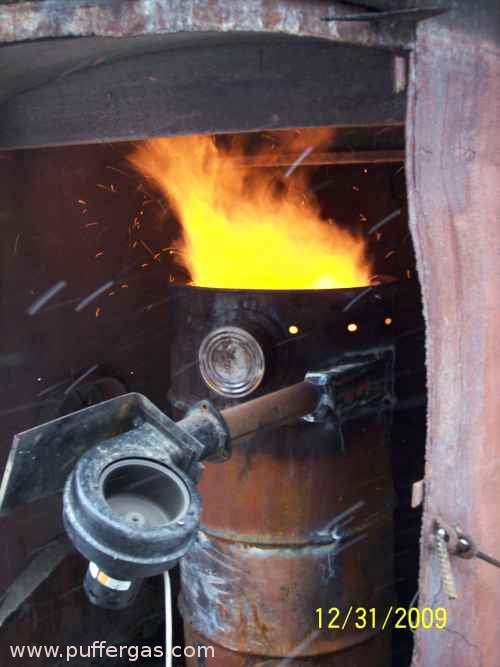
I'm running a gasifier that to date, ran continuous (without shutdown) for
2 months, this was the limit of the steels used to build the unit, upon examination the delamination of the steel in the internal "hot spot" areas was so severe that these areas had to be replaced with new items. not once but twice during the heating season.
we have moved away from steels in these critical areas, and on to refractory, and are preparing for a new set of tests this coming winter (this is a building heating only gasifier).
view through the tuyere here:
Greg Manning,
Canadian Gasifier Ltd.
Building Hi-Performance Gasifiers, Since 2001
Brandon, Manitoba, Canada
1 (204) 726-1851
Submitted by Erin Rasmussen on
GTZ Hera Report, August 2010
Experience with Small-scale Technologies for Basic Energy Supply:
Part I: Biomass Gasification
Small-scale Electricity Generation from Biomass GTZ-HERA has looked more closely into the small-scale use of biomass for rural off-grid electrification. Results are disillusioning.
Following the hype and frustrations over a global bio-fuel market, expectations regarding biomass now focus on local power generation in rural areas of developing countries. International organisations and donors advocate wood gasification, biogas, and vegetable oil as sustainable sources for decentralized power supply. Countless success stories on biomass use for small-scale electricity generation have been published.
Submitted by Erin Rasmussen on
Leland T. "Tom" Taylor, Thermogenics, August, 2010
The following is a summary of the results of the Army and other DOD entities' work in trying to do small scale waste to energy operations:
http://e2s2.ndia.org/pastmeetings/2009/tracks/Documents/8171.pdf
We applied for the SBIR grant which was one of the initializing operations and our operation was actually used as a basis for the original RFP as I was interviewed for several days by a civilian contractor who was tasked to develop a RFP for this program. Many of the standards and other criteria were based upon the equipment which we had running at the time the contractor visited our facility in Albuquerque.
Since then we have been able to achieve the small scale, flex fuel operation to power in the 100 kwe range quite successfully with significant amounts of innovation. The simplicity and efficiency is unparalleled.
Submitted by Erin Rasmussen on
Alexis T. Belonio, Daniel A. H. Belonio, and Lucio Larano, August 2010
This paper (see attached) describes a continuous-flow rice husk gasifier (CFRHG) designed and developed for various thermal applications such as cooking, drying, kiln firing, baking, and others. The technology follows the principle of a moving-bed, down-draft reactor converting raw rice husks into combustible gases that is rich in carbon monoxide (CO) and hydrogen (H2).
Different sizes were built and tested in collaboration with the private sector both in the Philippines and in abroad. The gasifier units which were built, tested and evaluated have varying reactor diameter, ranging from 0.40 to 1.20 m with a corresponding power output of 35.7 to 321.2 kWt. The rice husk consumption rate for the different reactor diameters tested ranges from 19 to 169 kg per hour. The specific gasification rate of the gasifiers was found to operate well at 150 kg/hr-m2. The temperature of the gas leaving the reactor varies from 150° to 270°C for all the units tested. The flame temperature reaches as high as 400° to 800°C, depending on the size of the reactor. The bigger the size of the reactor diameter, the higher is the flame temperature. The parasite load varies from 4.2% for the smaller diameter reactor to 1.5% for the bigger model. Combustible gases are generated within 5 to 30 minutes for the different sizes tested. The heating value of the gas ranges from 1200 to 1400 kcal/m3. And, only one person is needed to operate the small gasifier and two persons are needed for the big gasifier model.
Results of the tests showed that the CFRHG is convenient to use and its operation is easily controlled with the use of gas valves. There is no smoke emitted during operation. Black carbon content and tar emissions were found to be very minimal. The char produced can be used for agricultural application and the ash produced can be used for the production of low-cost construction materials.
The CFRHG technology can be produced at P1,500.00 per kWt. Presently, the different gasifier models presented are installed in the Philippines, Indonesia, and Vietnam. In terms of payback period, investment cost for the CFRHG can be recovered within 2.4 to 5.3 months as compared with kerosene, diesel, and LPG fuels.
Submitted by biolists on
United States Department of Energy, Office of Fossil Energy's National Energy Technology Laboratory (NETL), August, 2010
Gasifipedia
http://www.netl.doe.gov/technologies/coalpower/gasification/gasifipedia/TOC.html
Gasifipedia appears to focus on Coal Gasification, but it has nice clear illustrations and information that is both introductory and more detailed.
Copyright © 2006 - 2012 All Rights Reserved by the original Copyright holder.
Copyright is retained by the original contributor to the discussion list or web site.
Related Sites: Bioenergy, Stoves, Renewable Carbon, BioChar (Terra Preta)
The BioEnergylists.org web sites, and related discussion groups are sponsored by:
TR Miles Technical Consultants Inc.
www.trmiles.com
Specializing in the Development of Biomass Energy and Environmental processes.